A Bathroom Floor Tile Label Must Prove More Than the Word Porcelain
What can you actually prove from a tile carton marked porcelain before spending a one-room budget? The word establishes only one part of the record. A suitable bathroom floor also needs traceable evidence for floor use, surface wear, wet traction, dimensions, and production consistency.
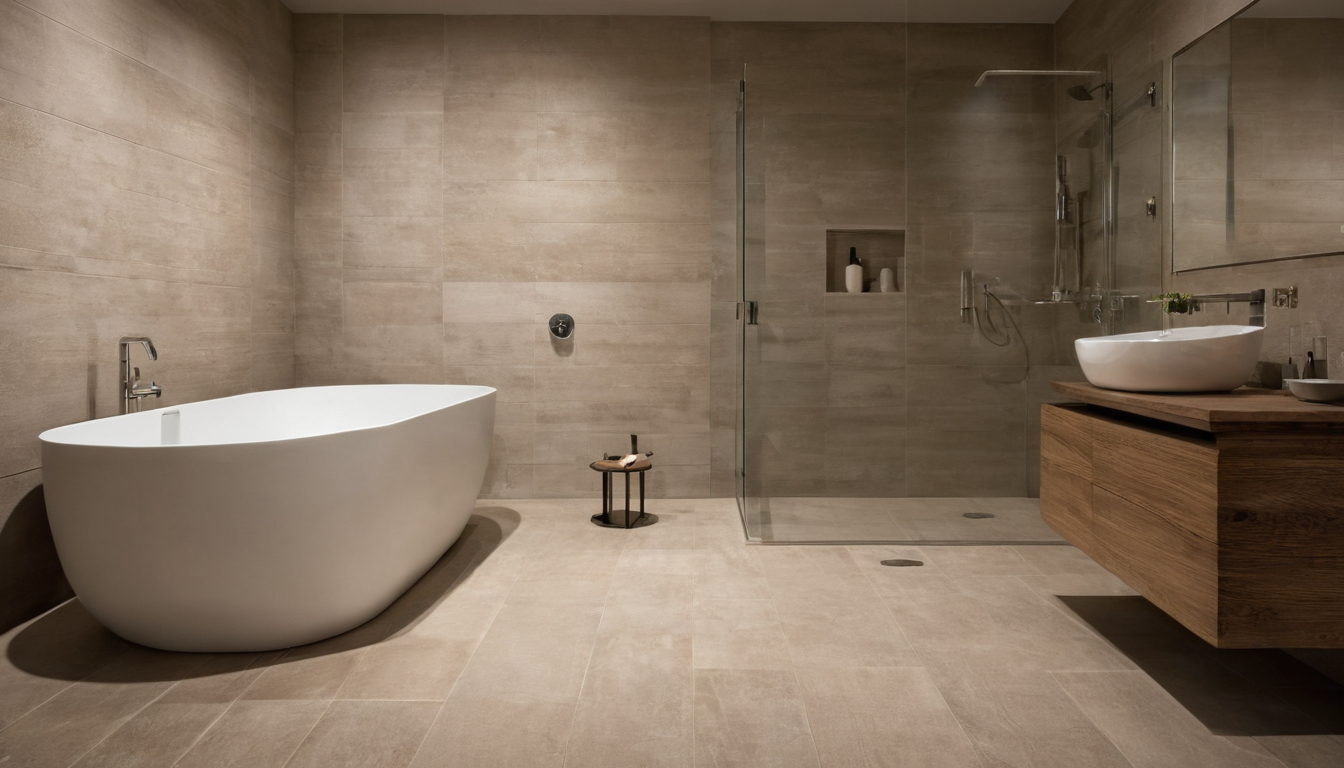
A Bathroom Floor Tile Label Must Prove More Than the Word Porcelain shown as an editorial reference for proportion and finish coordination.
The word porcelain does not by itself qualify a tile for a bathroom floor
For a U.S. residential bathroom floor, porcelain identifies a water-absorption classification when testing supports the claim. It does not establish wet traction, abrasion resistance, dimensional consistency, breaking strength, or manufacturer approval for floor use.
Porcelain describes absorption rather than complete bathroom-floor performance
ANSI A137.1 classifies porcelain tile as ceramic tile with water absorption of 0.5 percent or less. ASTM C373-18(2023) provides laboratory methods for measuring water absorption in fired ceramic products under specified preparation, testing, calculation, and reporting conditions. That result does not test surface wear, traction, strength, or the installed assembly.
Certification and conformity marks are program-specific evidence, not automatic bathroom-floor approval. An ordinary bathroom floor, a shower floor, and a continuously wet installation have different drainage, traction, and waterproofing demands.
Ceramic tile can qualify when its documented floor-use results meet the application
Nonporcelain ceramic tile can serve an interior residential bathroom floor when the manufacturer approves that use and reports suitable surface performance. Conversely, porcelain sold as wall-only tile fails the application regardless of branding.
The porcelain label also says nothing about adhesives, sealers, or cleaners. The U.S. Environmental Protection Agency identifies building materials and cleaning products as possible indoor VOC sources and recommends increased ventilation when using products that emit VOCs indoors. The next buying check is the carton itself.
A bathroom floor tile carton needs six verifiable entries before purchase
A useful carton should identify the manufacturer and product, intended floor use, production lot or shade, dimensions, quantity, and a route to technical performance data. Missing information does not prove that a budget tile fails, but it does require verification before purchase.
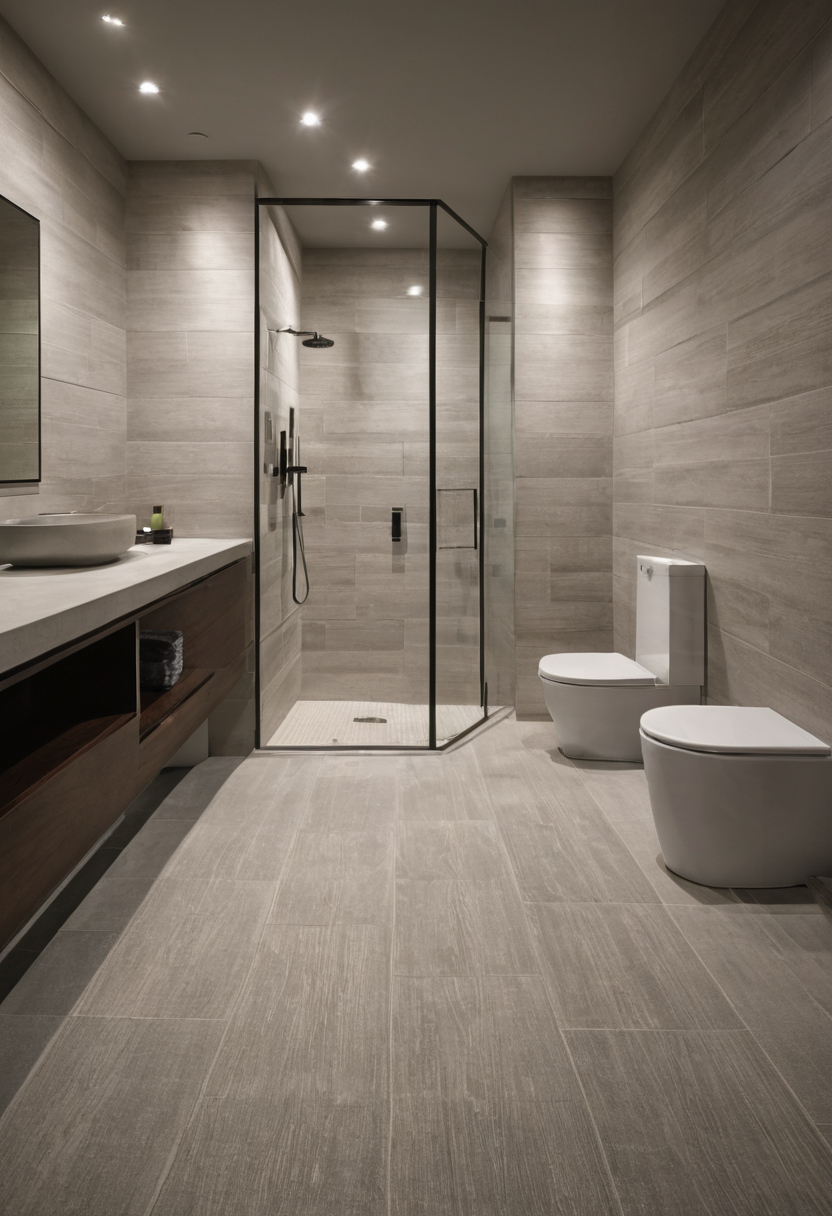
A bathroom floor tile carton needs six verifiable entries before purchase shown as a planning reference for layout, scale, and material decisions.
The carton audit separates required identification from useful performance data
Carton markings identify what is being purchased. The matching technical sheet supplies test results and limitations that may not appear on the box. Check these six entries:
- Manufacturer and exact product identity: Record the series, item number, color, finish, and format.
- Intended use: Find a floor-use statement or symbol, then confirm that the technical sheet permits residential bathroom floors.
- Production identification: Photograph the shade, caliber, and lot markings. Shade groups color variation, caliber groups production size, and the lot identifies a manufacturing run.
- Dimensions: Record the nominal size and obtain actual dimensions and thickness from the technical sheet. Nominal size is a product description, not a layout measurement.
- Quantity: Confirm the number of pieces and covered area per carton before calculating the order.
- Performance-data route: Locate a scannable code, web address, or document reference leading to absorption, abrasion, wet-traction, facial-variation, and use-limitation data.
The product code must match the technical sheet exactly
A result for a similar series name is not enough. Match the item number, color, finish, size, and thickness because polished, textured, mosaic, and large-format products within one series may carry different applications or test results.
Documentation must remain specific to the application. The National Park Service Museum Handbook, for example, provides preservation, documentation, access, and use guidance, but that general documentation source cannot establish residential tile performance. Only records tied to the tile product can do that.
Photograph every carton end before checkout and reject substitutions until the codes are compared. Carton records also do not correct an existing moisture problem. The EPA guide to mold and moisture advises fixing wet or damp spots promptly and controlling indoor humidity. Once product identity and room conditions are understood, inspect the absorption result.
ASTM C373 water absorption verifies porcelain classification but not waterproofing
ASTM C373 measures water absorbed by a conditioned fired ceramic specimen under a specified laboratory procedure. The percentage can support classification, but it cannot establish that grout, penetrations, substrate, or the completed bathroom floor is waterproof.
| Evidence entry | What it can establish | What it cannot establish |
|---|---|---|
| ASTM C373 result | Water absorption calculated from the specimen’s dry and saturated masses | Waterproof performance of the installed floor |
| Absorption of 0.5 percent or less | Support for porcelain classification under ANSI A137.1 when the product and declaration match | Abrasion resistance, breaking strength, or wet traction |
| Membrane-system instructions | Required preparation, seams, penetrations, drains, and transitions | The tile body’s absorption classification |
The reported absorption value must be tied to the tested tile product
The technical sheet should connect the result to the carton’s product code, size, finish, and manufacturing source. A statement that an entire collection is porcelain needs verification when the sheet covers several formats, surfaces, or factories.
ASTM C373 specifies a vacuum procedure for pressed ceramic tile and a boil procedure for extruded ceramic tile and certain other fired products. A countertop soaking experiment is not an ASTM C373 result because specimen conditioning, procedure, calculation, and reporting controls are missing.
Low tile absorption does not replace a bathroom waterproofing plan
ASTM C373 tests the fired tile specimen, not grout joints, perimeter movement joints, fastener penetrations, backer board, or membranes. A shower receptor requires a coordinated waterproofing and drainage system. An ordinary bathroom floor faces different exposure, although local requirements and the selected installation system may still call for a membrane.
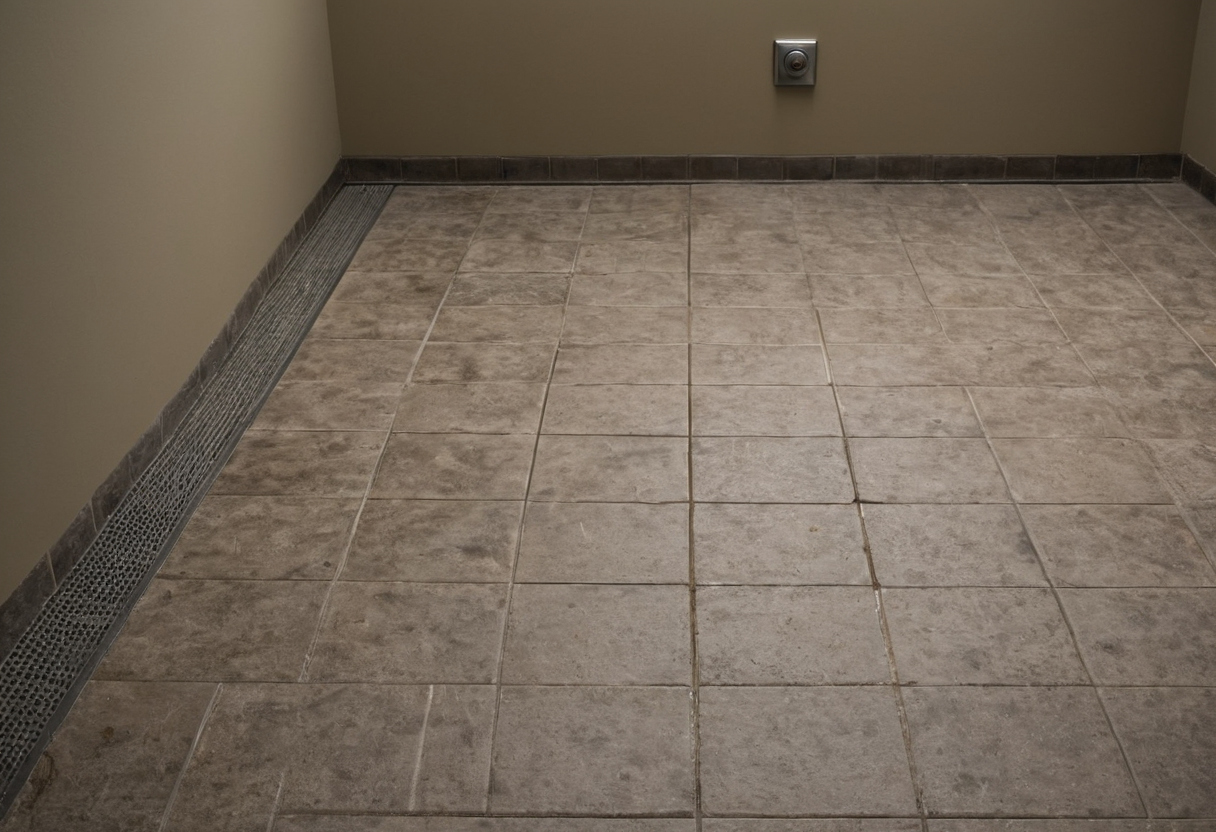
ASTM C373 water absorption verifies porcelain classification but not waterproofing shown as an editorial reference for proportion and finish coordination.
After absorption passes, the next evidence gate is separate: bathroom floor use still requires documented abrasion performance and wet traction.
Bathroom floor use requires separate evidence for abrasion and wet traction
A bathroom floor tile needs a manufacturer floor-use declaration plus surface tests suited to its finish and expected traffic. Glazed and unglazed tiles use different abrasion methods, while wet traction is evaluated separately. Accept no rating unless the technical sheet identifies the method, product finish, and use limitation.
Glazed and unglazed bathroom tiles do not use the same abrasion test
ISO 10545-7 evaluates visible surface abrasion on glazed ceramic tile and assigns a classification based on the test result. Product literature may call this a PEI rating, but the useful evidence is the named method, reported class, and manufacturer approval for the specific finish and residential floor traffic.
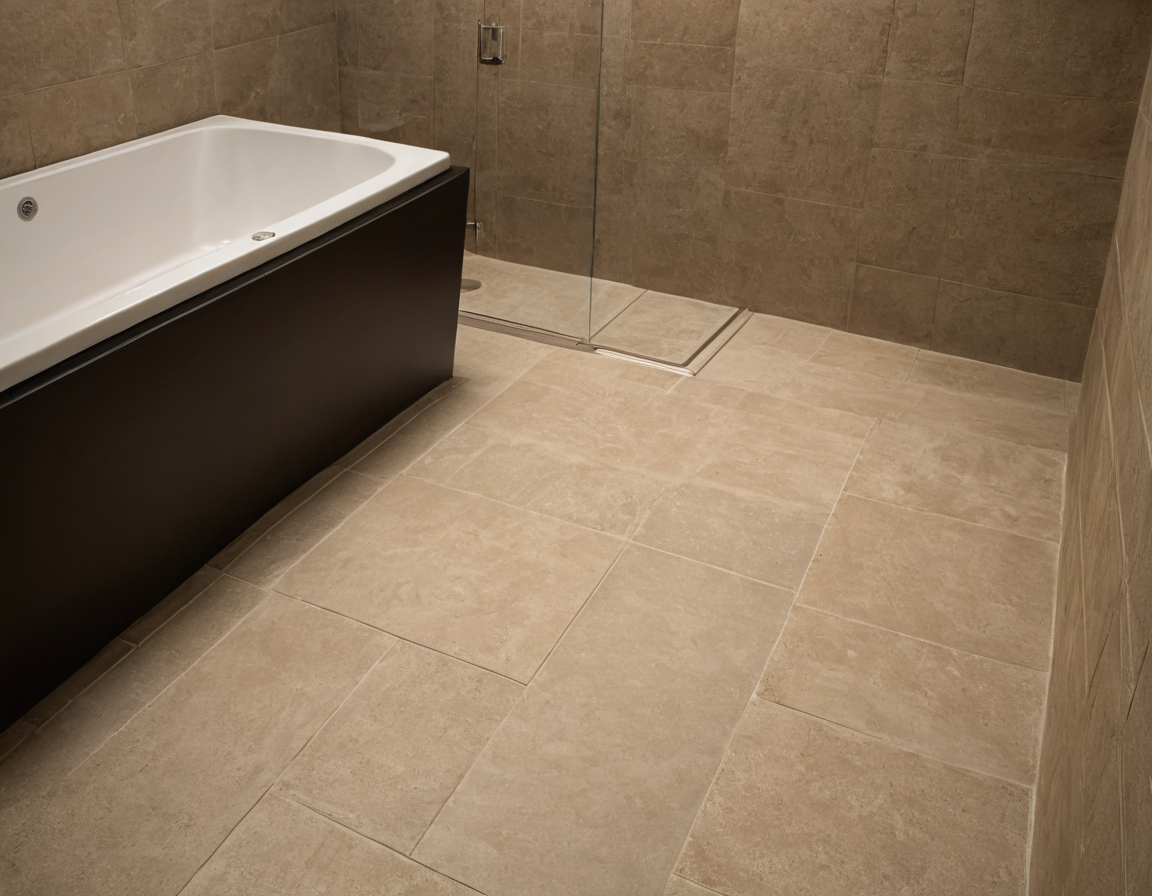
Bathroom floor use requires separate evidence for abrasion and wet traction shown with finish, fixture, and clearance relationships visible.
ISO 10545-6 measures deep abrasion of unglazed ceramic tile and reports material removed by the test. That result is not interchangeable with a glazed-tile class. First identify whether the tile is glazed or unglazed, then match its reported result to the intended-use statement.
A wet DCOF result is not a universal no-slip guarantee
ANSI A326.3 evaluates dynamic coefficient of friction under defined conditions and supports use classifications such as interior dry, interior wet, and exterior wet. A reported wet DCOF applies to that method and specimen, not every bathroom condition.
Soap residue, cleaning products, standing water, slope, drainage, footwear, and maintenance can change traction. A tile approved for an ordinary interior wet floor may still be excluded from shower floors, ramps, barefoot areas, or submerged applications. Check each limitation rather than treating one coefficient as a safety promise.
A manufacturer floor-use restriction overrides style and porcelain branding
Reject any tile marked wall-only or excluded from the intended wet-floor application, even if the carton says porcelain and the surface feels textured. Size-specific and finish-specific restrictions also control. Approval for a matte mosaic does not automatically cover a polished large-format version in the same collection.
Once surface performance passes, inspect dimensions, caliber, shade, and production-lot markings before committing to the room quantity.
Tile dimensions, caliber, shade, and lot numbers affect a one-room bathroom purchase
Nominal tile size may differ from measured manufacturing size. Plan from the manufacturer’s stated dimensions and joint recommendation, then require compatible caliber, shade, and production-lot markings across every carton.
Nominal tile size must not be used as the sole layout dimension
A retail size such as “12 by 24” is a product category, not a cutting measurement. Use the technical sheet’s actual size, thickness, rectified status, recommended grout joint, and dimensional compliance before you test the bathroom layout and fixture clearances.
- Measure several sample tiles, including diagonals, and compare the readings with the manufacturer’s declared dimensions.
- Include grout joints when calculating wall-edge cuts, doorway cuts, coverage, and fixture clearances.
- For a sloped shower floor, confirm that the selected format is approved for the planned slope and drain arrangement.
All bathroom-floor cartons should be checked for compatible lot markings
Caliber identifies a size grouping, while shade, dye-lot, or production-run codes track appearance differences. Terminology varies by manufacturer, so photograph each carton field and compare codes before accepting delivery.
- Reject or exchange unexplained caliber mismatches before opening more cartons.
- Check the facial-variation rating and blending instructions. Deliberate variation may still require mixing pieces from several cartons.
- Record damaged cartons and confirm the retailer’s exchange terms before installation starts.
The safest next step is to approve one carton against the technical sheet, room measurements, and actual lighting before ordering the full floor.
A one-room buyer should approve one carton before ordering the full bathroom floor
Inspect one returnable carton before ordering the full quantity. Match its product code to the technical sheet, measure several pieces, clean a sample, inspect the finish under bathroom lighting, and confirm every floor-use limitation. Set the final quantity only after completing the layout and cutting plan. For related context, review bathroom decisions to settle before choosing tile.
- Confirm the retailer’s sample, opened-carton, special-order, return, and restocking terms before breaking the seal.
- Compare the carton code, size, finish, shade, and lot with the manufacturer’s current technical sheet.
- Inspect several pieces under the room’s actual lighting for glare, edge damage, surface defects, and obvious warpage.
- Wet and clean one loose piece only as the manufacturer directs, using an approved cleaner.
Use the same lamp type and color appearance planned for the finished room. ENERGY STAR reports that qualified LED lighting uses at least 75 percent less energy and lasts up to 25 times longer than incandescent lighting, but those efficiency figures do not predict glare, color rendering, or how a tile finish will look under a particular fixture.
A home water, stain, or scratch check can reveal maintenance concerns. It cannot establish standardized absorption, abrasion, or traction performance.
The cutting and breakage allowance must reflect room shape, diagonal placement, pattern matching, installer experience, stock continuity, and retained repair pieces. A difficult layout or uncertain future availability warrants more reserve than a simple straight-set room.
Missing test data or use limitations are reasons to reject the product
- Pass: Product identity, floor approval, test data, dimensions, and compatible lot markings are documented.
- Verify: The carton is incomplete, but the manufacturer can supply a matching technical sheet and clarify installation or cleaning limits.
- Reject: The tile is wall-only, visibly defective, mismatched by code or lot, unsupported by performance records, or unavailable for replacement.
Ask the manufacturer about unclear restrictions and the installer about layout waste. Buy the full floor only after the carton earns a documented pass.
Bathroom floor tile questions have product-specific answers
The carton and matching technical sheet should answer these common questions without requiring assumptions based on appearance or the word porcelain.
Should a residential bathroom floor use ceramic or porcelain tile?
Either can qualify. Choose the product whose manufacturer permits the intended floor use and supplies suitable absorption, abrasion, traction, dimensional, and installation information.